


In short: Bouillante’s hot baths are volcanic hot springs on the Caribbean shore, free to access. The best known are the Bain du Curé at Anse à Sable, the town bath across from the geothermal power plant, and the Bain de Thomas at Anse Thomas. All are 5 to 15 minutes’ drive from Malendure Beach, so they pair easily with a glass-bottom boat trip in the Cousteau Reserve.
Key takeaways
- Why the water is hot: Bouillante sits on a geothermal reservoir heated by the volcanic activity of Basse-Terre. The town owes its name (French for “boiling”) and its geothermal power plant to it.
- Baths worth knowing: the Bain du Curé (Anse à Sable), the town bath across from the plant, the hot spring in the Bouillante River, and the Bain de Thomas (Anse Thomas).
- Cost: free access; only the Anse Thomas parking lot now charges a fee.
- Safety: the water can be scalding where it comes out of the rock. Test it before getting in and follow the health notices, as a site can be closed temporarily.
- When to go: year-round, ideally on a weekday morning to avoid the crowds.
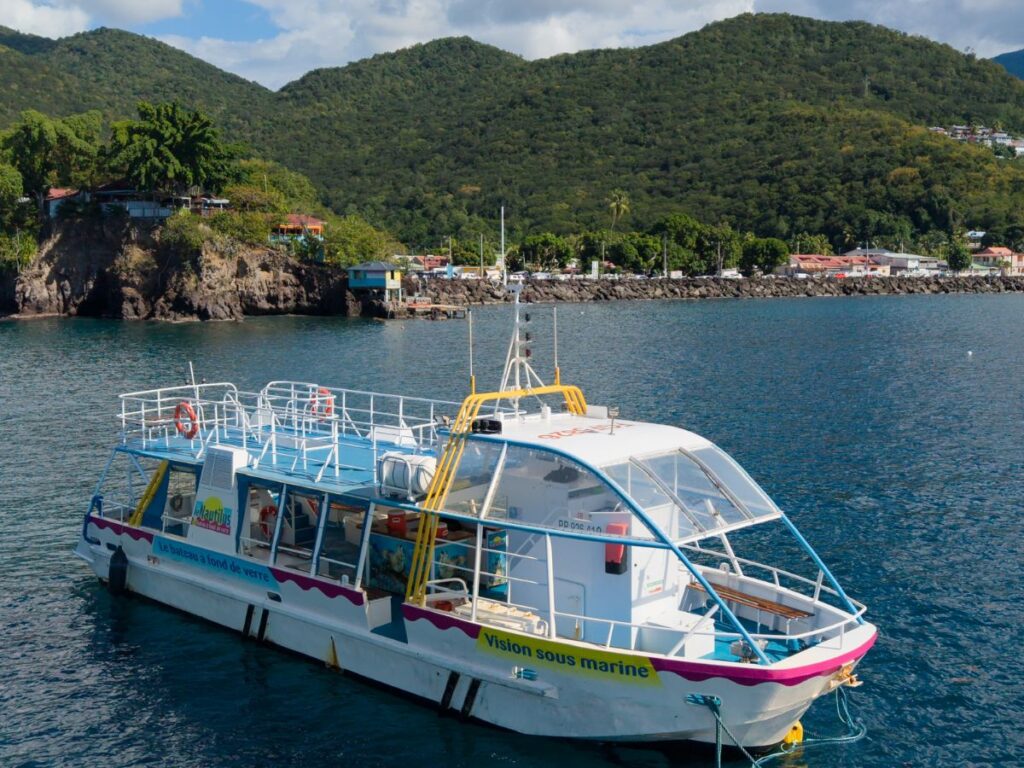
- Combine with: the glass-bottom boat tour on Le Nautilus from Malendure, a few minutes to the north.
Updated November 24, 2026.
In Bouillante, on Guadeloupe’s Leeward Coast (Côte-sous-le-Vent), the volcano’s heat reaches all the way to the shoreline. Springs bubble up between the pebbles, run into the river or mix straight into the Caribbean Sea, and you can soak in naturally hot water with a view of the open sea. Here is where to find Bouillante’s hot baths, how to get there, which precautions to take, and how to pair them with a day in the Cousteau Reserve.
Why is the water hot in Bouillante?
Bouillante owes its name to its scalding waters. Beneath the town, at an average depth of about 1,500 meters, a high-temperature water reservoir is heated by the volcanic activity of Basse-Terre, the island of La Soufrière volcano. Part of that heat rises through faults and surfaces as hot springs: on the beach, in the river or directly in the sea.
The same energy powers the Bouillante geothermal plant in the heart of town. Run by Géothermie Bouillante, a subsidiary of the Ormat group, it generates 15.5 MW, close to 10% of Guadeloupe’s electricity needs, and is set to double its capacity by 2030 to cover about 20% of the island’s needs (Banque des Territoires, April 2026). Some of the hot water flows into the sea right across the road: it is one of the busiest baths in town.
Bouillante’s hot baths, from north to south
The sites are listed starting from Malendure Beach and heading south along the coastal road (RN2). Temperature, water level and access change with the seasons and the rains, so don’t be surprised if a bath is hotter, cooler or busier than on a previous visit.
Bain du Curé, at Anse à Sable
The closest to Malendure. This small stone basin on the edge of Anse à Sable beach collects a natural thermal spring. According to Guadeloupe National Park, it is named after a Bouillante priest (curé) who had it built around 1845. The water hovers around 40 °C (104 °F) and is said to be rich in iron.
Getting there: on the RN2, about 2 km from the town center toward Pointe-Noire, follow the signs for Anse à Sable. The small parking lot below fills up fast. From the beach, walk along the cliff to reach the basin. The site lies on the Pointe à Lézard walk, a short coastal trail marked by the National Park.
The town bath, across from the geothermal plant
Right in the center of Bouillante, across the road from the plant, hot water pours into the sea over a pebble beach. At the outlet it is almost scalding; farther away, the mix with seawater makes it gentler, and everyone picks their own spot.
It is the easiest bath to reach: no walking, with shops, bakeries and restaurants a stone’s throw away. On the other hand, the setting is more urban and it can get very busy depending on the time of day.
The hot spring in the Bouillante River
Less well known, a hot spring rises in the bed of the Bouillante River, reached by walking along the river behind the town hall. This is fresh water: as in all of Guadeloupe’s freshwater hot pools, keep your head above the water (see our tips below).
Bain de Thomas, at Anse Thomas
South of town, a “Bains Thomas” sign marks the way down to Anse Thomas. After a 5- to 10-minute walk from the parking lot, which now charges a fee, you reach a fairly wide pool at the foot of the cliff, fed by water seeping from the rock, and a second, cooler pool by the sea. It is the wildest setting, but also where the water can be hottest: on some days, you can’t keep your feet in for more than a few seconds.
Good to know: in May 2026, swimming at Anse Thomas was temporarily banned by prefectoral order after tests by the regional health agency (ARS) found bacterial pollution linked to wastewater. Before you go, check the signs on site or the water quality on the official website baignades.sante.gouv.fr (in French).
Bouillante hot baths compared
| Bath | Where | Access | Water | Best for |
|---|---|---|---|---|
| Bain du Curé | Anse à Sable, about 2 km from town toward Pointe-Noire | Small parking lot, a few minutes’ walk | Thermal spring in a basin, around 40 °C | A quiet soak before or after a walk |
| Town bath | Center of Bouillante, across from the plant | Roadside, no walking | Hot water mixing with the sea, over pebbles | An easy break, with family |
| Bouillante River | Behind the town hall | Along the river | Freshwater hot spring | The curious, as a short detour |
| Bain de Thomas | Anse Thomas, south of town | Paid parking, then a 5–10 min walk | Pools at the foot of the cliff, sometimes very hot | The wildest setting |
Practical tips and safety
- Test the temperature with your hand or foot before getting in: near the outlets, the water can burn. Keep children within arm’s reach.
- In freshwater pools, keep your head above the water and don’t dive. Guadeloupe’s health authorities recommend this because of a rare but dangerous amoeba found in some warm fresh water; they note that there is none in hot baths in the sea.
- Follow the signs: the ARS monitors water quality and the prefect can temporarily ban swimming at a site.
- Don’t stay in too long at a time, drink water and get out if you feel unwell. If you are pregnant or have a heart condition, ask a doctor first.
- Bring water shoes: pebbles and rocks are slippery.
- No soap or shampoo, and take your trash with you.
When to go to Bouillante’s hot baths
The baths are open year-round. Weekday mornings are the quietest; in the late afternoon and on weekends, locals gather there and the best-known sites fill up. Avoid the seaside baths on days with heavy swell, and the river spring right after heavy rain.
During the dry season, roughly December to April, conditions are usually at their best. And on a gray day, a hot bath is still a great idea: find more things to do in Guadeloupe when it rains.
Hot baths and the Cousteau Reserve: a day out in Bouillante
The hot baths and the Cousteau Reserve are just minutes apart. The easiest plan: the sea in the morning, the heat in the afternoon.
- Morning: board at the Malendure pier for the glass-bottom boat tour to Pigeon Island (first departure at 9:45 a.m.).
- Lunch: Creole food facing the islets on Malendure Beach.
- Afternoon: a bit of snorkeling from the beach, then head south to the Bain du Curé, the town bath or Anse Thomas.
- Late afternoon: one last hot soak before driving back, or heading north to Deshaies.
On board Le Nautilus
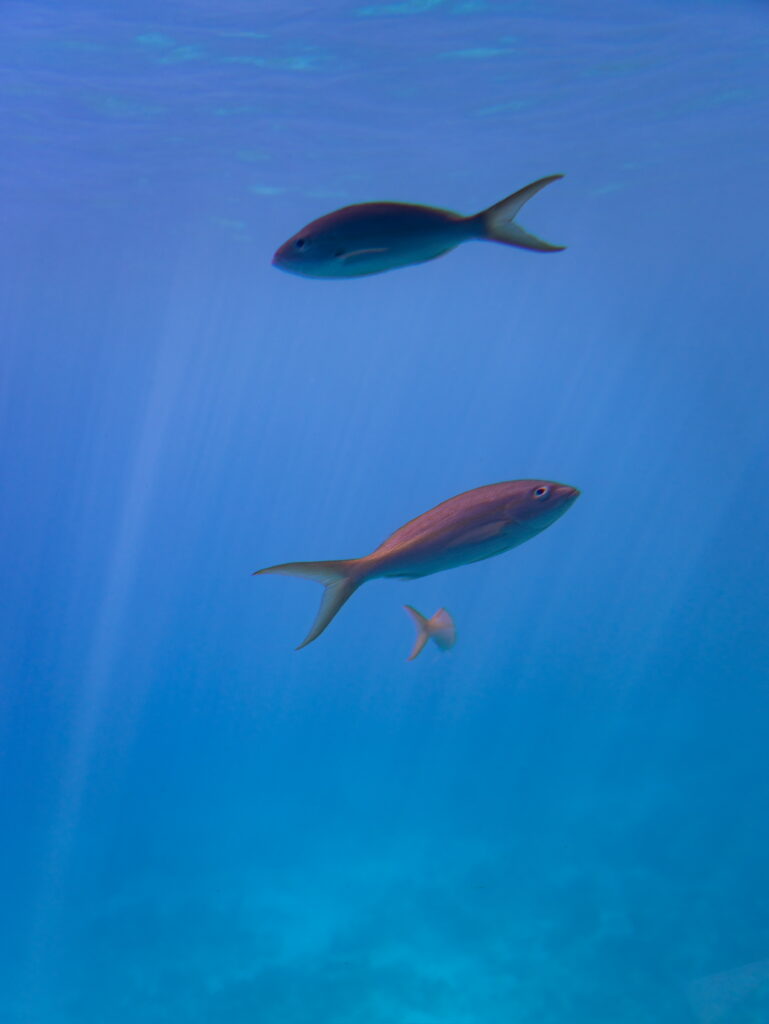
From the Malendure pier, Le Nautilus takes you on a 1-hour-15-minute trip into the heart of the Cousteau Reserve. From the air-conditioned glass hull, 1.50 m below the surface, you watch corals, tropical fish and sometimes turtles without getting wet. A swim stop of about 20 minutes at Pigeon Island lets you snorkel or try the slide, and the trip ends with a planter’s punch or a soft drink.
Prices: €25 per adult, €13 for children aged 4 to 12, free for children under 4. A trip the whole family can enjoy, including babies and non-swimmers.
Other hot springs in Guadeloupe
If you are exploring Basse-Terre, other hot baths are worth a detour:
- Bains Jaunes (Saint-Claude): a pool at the start of the hike up La Soufrière, perfect after the walk.
- Bain des Amours and the Dolé baths (Gourbeyre): pools set in lush greenery, along the same road.
- Sofaïa (Sainte-Rose): sulfurous water channeled into showers, right by the parking lot.
- Ravine Chaude (Lamentin): a thermal center that is often closed; check before you go.
These are freshwater springs: the keep-your-head-above-water rule applies here too.
Conclusion: are Bouillante’s hot baths worth it?
Absolutely. Free, a few minutes from Malendure and one of a kind, Bouillante’s hot baths are the easiest way to feel the heat of Guadeloupe’s volcano. Pick the town bath for convenience, the Bain du Curé for peace and quiet and Anse Thomas for the scenery, follow the health notices and always test the water before getting in.
For a full day on the Leeward Coast, start with the Cousteau Reserve aboard Le Nautilus, then finish in the hot water. Find more ideas in our guide to what to do in Bouillante.
Bouillante hot baths: frequently asked questions
Where are Bouillante’s hot baths?
On the Leeward Coast, on the west side of Basse-Terre. The main ones are the Bain du Curé at Anse à Sable, the town bath across from the geothermal plant, the river spring behind the town hall and the Bain de Thomas at Anse Thomas, all 5 to 15 minutes’ drive from Malendure Beach.
Are Bouillante’s hot baths free?
Yes, access to the baths is free. Only the Anse Thomas parking lot now charges a fee.
How hot is the water?
It varies by site and season. The Bain du Curé hovers around 40 °C (104 °F); at the Bain de Thomas and at the plant outlet, the water can be scalding. Always test it before getting in.
Can you visit the hot baths with children?
Yes, as long as you stay close: choose spots where the hot water mixes with the sea, check the temperature and keep the soak short. The town bath, with no walk to get there, is the most practical with kids.
Is swimming allowed at Anse Thomas?
It was temporarily banned in May 2026 after unfavorable ARS test results. The situation changes with each round of sampling: check the signs on site or baignades.sante.gouv.fr before you go.
Why is the water hot in Bouillante?
The town sits on a geothermal reservoir heated by the volcanic activity of Basse-Terre. That heat feeds the hot springs and the geothermal power plant, which covers nearly 10% of the island’s electricity needs.
Can you combine the hot baths and the Cousteau Reserve in one day?
Yes. Take the glass-bottom boat tour from Malendure in the morning (1 hr 15 min, first departure at 9:45 a.m.), have lunch on the beach, then enjoy the hot baths in the afternoon, 5 to 15 minutes’ drive away.